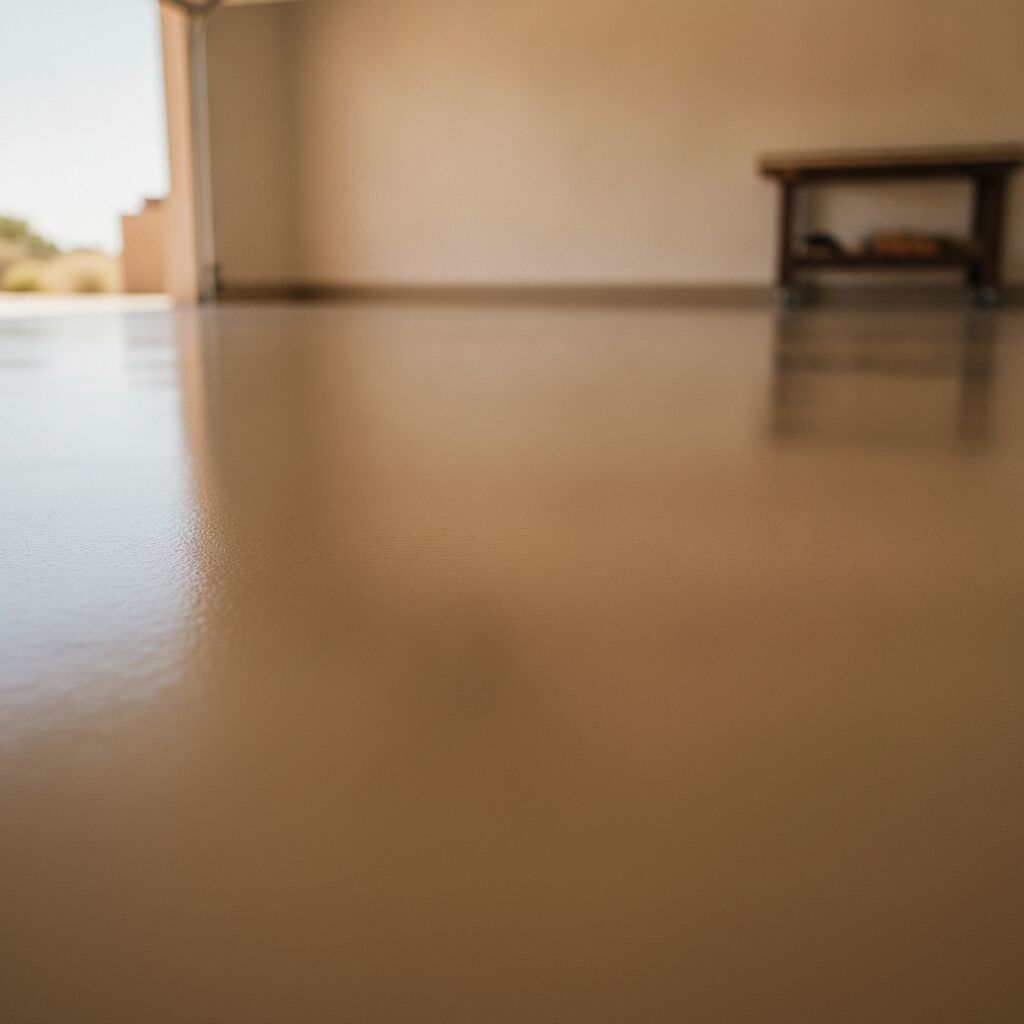
Epoxy and polyurea are both common garage floor coatings, but they respond very differently to what New Mexico's climate actually does to a concrete slab — day in, day out. Here's a direct comparison.
This is the big one for New Mexico. A garage slab here can swing 20-30°F between an afternoon high and an overnight low, every single day. Standard epoxy is a relatively rigid coating — over hundreds of daily expansion/contraction cycles, that rigidity is more prone to surface cracking. Polyurea's chemistry is inherently more flexible, allowing it to move with the slab instead of resisting it.
Epoxy typically requires a longer cure window — often 24 to 72 hours before light traffic. Polyurea cures much faster, often within hours, which also means less time spent curing while the slab is already cycling through a temperature swing.
Albuquerque sits around 5,300 feet, Santa Fe nearly 7,200 — thinner air means more intense UV exposure than at sea level. Formulation quality matters here for either system, but it's a real factor to ask about regardless of which coating you choose.
Epoxy is often the lower-cost option upfront. Given its faster cure and better resistance to New Mexico's specific daily thermal cycling, polyurea's higher upfront cost often evens out over the life of the coating.
Not sure which system is right for your garage? New Mexico Polyurea will walk through the tradeoffs for your specific space — reach out for a free estimate.
No obligation. We'll assess your space and give you a real number.